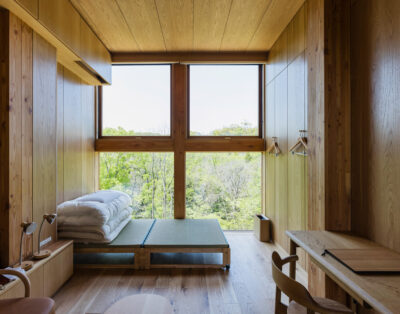
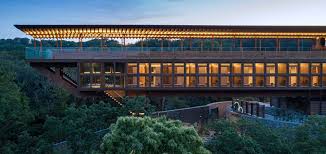
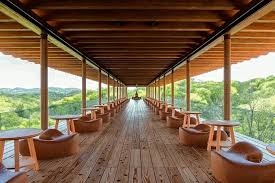
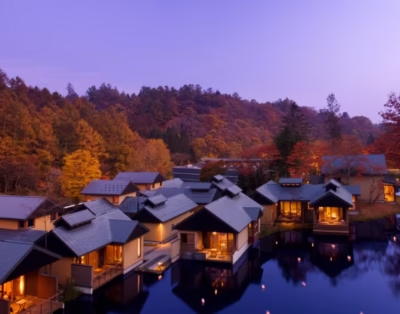
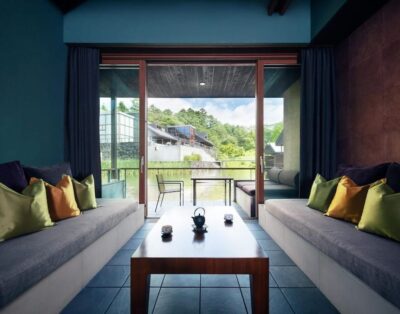
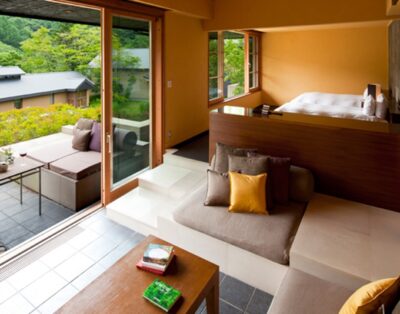
Japan is one of the most technologically saturated societies on earth, and yet it has preserved, with unusual intentionality, some of the most powerful environments for stepping away from it. The concept of forest bathing was codified here. The tradition of the mountain temple stay has been practised for over a thousand years. The culture of silence in certain spaces is not a retreat philosophy. It is simply how things are.
From the cedar forests of the Kii Peninsula to the bamboo valleys of Kyushu, from the volcanic landscape of Hokkaido to the quiet islands of the Seto Inland Sea, Japan offers an extraordinary range of natural and spiritual environments for genuine disconnection. The country does not need to market slowness. It has always known how to do it.
24
Retreats
7
Regions
4.9★
Rating
5–14
Days avg.
Why choose Japan
6 reasons to do your digital detox in Japan
Japan invented much of the technology that now competes for our attention. It has also, quietly and in parallel, maintained some of the most sophisticated practices for recovering from it.
🧘
A thousand years of contemplative practice
Japan has one of the world’s longest unbroken traditions of contemplative life. Zen Buddhism, Shinto forest rituals, and the practice of temple stays have been part of the cultural fabric for over a millennium. That inheritance gives Japanese retreat environments a depth and coherence that is difficult to replicate elsewhere. The silence in a Japanese mountain temple is not manufactured. It has been maintained for generations.
🌿
Shinrin-yoku: the science of forest bathing
Japan is the country that gave forest bathing its name and its scientific framework. Shinrin-yoku, the practice of immersive time in forested environments, was formalised here in the 1980s and has since been validated by decades of research showing measurable reductions in cortisol, blood pressure, and anxiety. The forests of Japan are not simply beautiful. They are understood, in the deepest sense, as medicine.
✈️
Well connected, genuinely remote once you arrive
Tokyo is one of the world’s best-connected hub airports, with direct flights from most major cities in Europe, North America, and Asia. The contrast between arrival and retreat is part of the experience: you land in one of the most stimulating cities on earth, and within two to three hours by train or car, you can be in a cedar valley where the only sound is water and wind.
🌍
A culture that already understands what you are doing
The Japanese concepts of ma (the value of empty space), wabi-sabi (the beauty of impermanence), and mottainai (the importance of not wasting) are not wellness trends. They are foundational cultural values that create a natural backdrop for a digital detox. You are not doing something unusual in Japan. You are doing something the culture has always quietly encouraged.
🌅
Onsen: recovery built into the landscape
Japan has over 3,000 hot spring resorts, many of them in remote mountain or coastal settings. The onsen tradition, bathing in geothermally heated mineral water, is one of the most effective and culturally embedded forms of physical recovery in the world. Many of the best digital detox retreats in Japan are built around or adjacent to onsen facilities, making recovery not just a programme feature but a daily ritual.
💚
Seasonal rhythms that shape the experience
Japan’s four seasons are not just weather. They are cultural events: cherry blossom in spring, the dense green heat of summer, the extraordinary colours of autumn maples, the austerity of winter snow. A digital detox in Japan takes on a different quality depending on when you arrive. Any season works. Each one offers a different kind of lesson in paying attention.
EXPLORE BY REGION
Where to go for a digital detox in Japan
Japan’s regions each offer a distinct character for a digital detox experience and this is just a glimpse. From the ancient pilgrimage routes of the Kii Peninsula to the volcanic silence of Hokkaido, each has its own quality of stillness and its own reasons for drawing those who need to step back from the pace of modern life.
01
Kii Peninsula & Koyasan
The Kii Peninsula, home to the ancient Kumano Kodo pilgrimage routes and the temple town of Koyasan, is Japan’s most spiritually significant landscape for those seeking genuine stillness. Walking the cedar-lined pilgrimage paths between mountain temples, staying in shukubo (temple lodgings), and waking to the sound of monks in morning ceremony creates a context for disconnection that is entirely unlike a conventional retreat. One of the most powerful digital detox experiences available anywhere.
Kyoto’s surrounding mountains, particularly the valleys of Kurama, Kibune, and Ohara, offer something the city itself cannot: genuine quiet within reach of one of Japan’s most visited cultural centres. Several small retreat centres and ryokan operate in these valleys, offering forest walks, meditation, and onsen in an environment that has been associated with contemplative life for centuries. Ideal for those who want culture and stillness in close proximity.
The Japanese Alps stretch across the centre of Honshu and contain some of the country’s most dramatic mountain landscapes. The Kiso Valley, with its preserved Edo-period post towns and cedar forests, and the Hakuba and Nozawa Onsen areas of Nagano offer exceptional environments for a screen-free retreat. Several wellness centres and mountain lodges operate here, most with direct access to forest trails and onsen.
Hokkaido is Japan’s northernmost and least densely populated island. Its landscape, volcanic mountains, vast caldera lakes, and wide coastal plains, has a scale and openness rare in Japan. The summers are cool and green; the winters are heavy with snow. Several retreat centres have established in the areas around Niseko, Furano, and the Shiretoko Peninsula, drawn by the combination of landscape, quiet, and exceptional onsen culture.
The islands of the Seto Inland Sea, particularly Naoshima, Teshima, and Shodo Island, offer a very different kind of Japanese retreat experience. Slow ferries, fishing villages, art installations embedded in the landscape, and a pace of life that has remained largely unchanged for decades. Less structured than a formal retreat programme, but for those who respond to beauty and slowness rather than scheduled practices, among the most memorable places in Japan to genuinely stop.
The length of your stay matters more than most people expect. Research on screen dependency and nervous system recovery consistently shows that the benefits deepen over time:
3-5 days
The reset
Gets you through the initial adjustment phase. Japan makes it easier than most places to settle quickly, but a short stay barely scratches the surface of what the country offers a serious retreatant.
7-10 days
The shift
The most commonly recommended duration. By day 5 or 6, most guests in Japan report a shift in how they relate to time: the rhythms of the temple, the forest, and the onsen begin to replace the rhythms of the screen.
14+ days
The transformation
Guests who stay two weeks or more consistently report that the change in their relationship with screens outlasts the trip by months. Japan’s combination of cultural depth, natural beauty, and structured daily rhythm makes that kind of lasting shift more achievable than most destinations.
Is a digital detox retreat in Japan suitable for solo travellers?
Yes. Solo travel to a Japanese digital detox retreat is not only common but particularly well suited to the format. Japan is one of the safest solo travel destinations in the world, and the culture of respectful quiet in retreat environments makes arriving alone feel natural rather than isolating. Temple stays and mountain retreats in particular attract a high proportion of solo guests, many of whom find that the combination of structure and solitude is exactly what they came for.
Do I need to speak Japanese to do a digital detox retreat in Japan?
For most retreats listed on our platform, no. International retreat centres and shukubo temple lodgings in major areas such as Koyasan, Kyoto, and the Japanese Alps increasingly operate in English or offer bilingual staff. That said, some smaller and more rural centres operate primarily in Japanese. Each listing specifies the language of the programme. If this is a concern, contact the venue directly before booking.
What makes a digital detox retreat different from a regular wellness stay in Japan?
A conventional wellness stay in Japan might include a ryokan dinner, a morning soak in the onsen, and a walk in the gardens. Those things are genuinely restorative. A digital detox retreat goes further: screens are absent or actively restricted, the daily schedule is structured around practices that support nervous system recovery, and the intention of disconnection is made explicit from arrival. The difference is not subtle. By day two, most guests notice a measurable change in the quality of their attention.
Can I keep my phone for emergencies during a digital detox in Japan?
Policies vary by retreat and are detailed on each listing page. Temple stays at Koyasan typically ask guests to observe the schedule of the monks, which makes phone use feel incongruous even when it is technically permitted. Most retreat centres ask guests to store devices or restrict their use to private rooms. Every venue on our platform has a staff contact available for family members who need to reach you. Discuss your specific needs with the venue before arrival.
Is Koyasan or the Kyoto mountains a better choice for a first retreat in Japan?
Both are exceptional, but they offer different experiences. Koyasan is more immersive and more austere: you sleep in a temple, wake to chanting, eat shojin ryori vegetarian cuisine, and are surrounded by a cedar forest cemetery that has been there for over a thousand years. The Kyoto mountains are quieter and more intimate, better suited to those who want forest walking and meditation without the ceremony. For a first retreat in Japan, Koyasan is the more singular experience. The Kyoto valleys are better for those returning.
What is the best season for a digital detox retreat in Japan?
Spring (late March to early May) and autumn (mid-October to late November) are the most popular seasons, for good reason: the light, the temperature, and the landscape are at their most striking. Summer is hot and humid but the forests are dense and the waterfalls are full. Winter, particularly in the Alps and Hokkaido, offers a completely different quality of silence: snow-covered temples, empty trails, and onsen that feel essential rather than optional. Each season works. The question is what kind of beauty helps you pay attention.